SkyShield Sentry
Acoustic Counter-UAS Protection For Fiber-Optic Tethered “Silent” Drone Detection
SkyShield Sentry Datasheet
Key Benefits:
Most counter-UAS systems are optimized to detect Group 2 threats using radar, RF direction finding, and EO/IR sensors.
The hardest problem remains unsolved: detecting and defeating silent, low-altitude Group 1 drones that emit little or no RF, operate below radar coverage, and directly enable lethal fires.
SkyShield Sentry - Sound Enhanced, Non-RF, Tethered Reconnaissance

Join Us at the Security & Policing Home Office Event – Farnborough, UK, March 11th - 13th, 2025
Read More
Creating the Next Frontier in Wireless Technology: The Critical Need for Wireless Airspace Defense
Read More
The Silent Threat of Rogue Wi-Fi Networks on Navy Ships – How LOCH's AirShield Could Have Prevented a Security Breach
Read MoreAirborne threats have evolved from large, expensive platforms to small, affordable, and widely available drones capable of surveillance, disruption, and attack.
Conventional defense systems struggle against this shift.
Missiles are costly, scarce, and mismatched to small drones
Gun systems depend on line-of-sight, ammunition, and reaction time
RF jammers fail against autonomous or tethered platforms
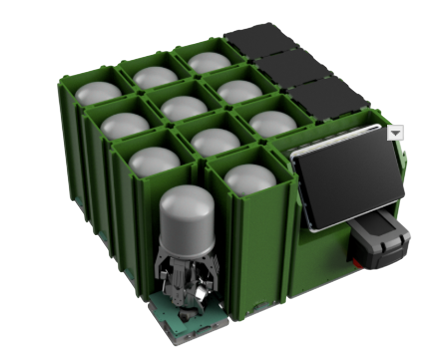
SkyShield Sentry is designed for this new threat environment. It operates in adverse weather, does not depend on optical line-of-sight, and uses a modular architecture combining early acoustic detection, automated tracking, and controlled kinetic interception.
The Problem We Solve
Small, Low-Cost Drones Have Redefined Modern Warfare — Tethered Drones Complicate the Threat
Group 1 unmanned systems are now routinely used to:
-
Maintain persistent, silent ISR over friendly positions
- Spot troop movement, vehicles and emissions
- Adjust artillery and indirect fires in near real time
- Operate continuously without RF emissions or battery constraints
Tethered drones represent one of the most dangerous evolutions of the Group 1 threat
Tethered drones can:
-
Remain airborne indefinitely
-
Operate with minimal acoustic and RF signatures
-
Avoid GPS and RF dependence entirely
- Remain invisible to RF-based detection systems
Understanding the Threat of Group 1 Drones
Static Predictability
Typical Characteristics:
Weight : 0–20 lb (≤9 kg)
Altitude : Below 1,200 ft AGL
Speed : Typically under 100 knots
Types of Group One Drones:
FPV attack drones
Commercial quadcopters
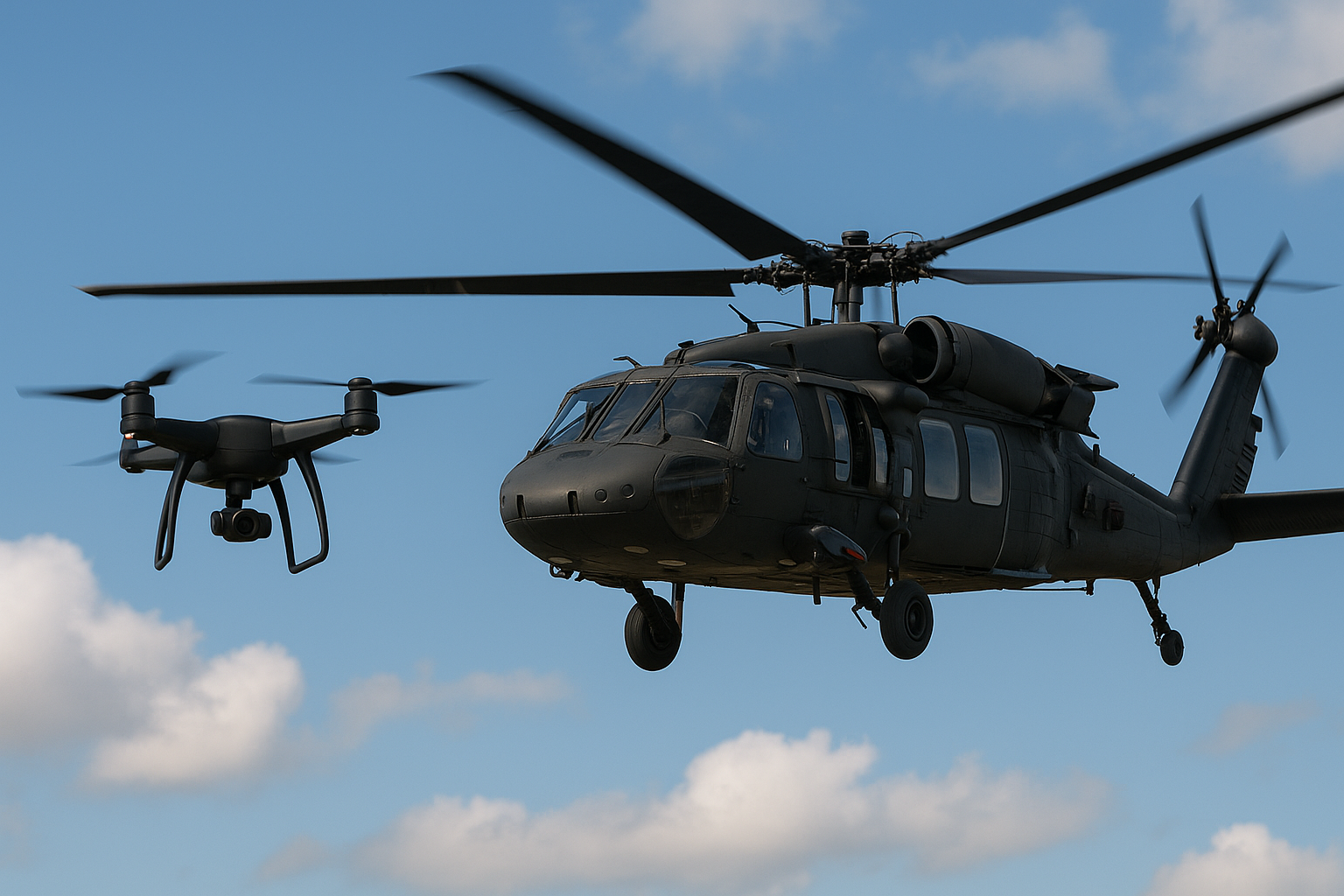
Tethered ISR drones providing persistent overwatch
Missions:
Continuous surveillance and target acquisition
Fire correction and battlefield shaping
Base perimeter and forward position monitoring
Tethered drones fundamentally break traditional C-UAS assumptions:
Minimal or no GPS dependence
Near-continuous endurance
Extremely low visual and electronic signatures
Understanding the Threat of Group 2 Drones
Static Predictability
Typical Characteristics:
Weight : 21–55 lb (10–25 kg)
Altitude : Below 3,500 ft AGL
Speed : Up to 250 knots
Missions:
Wide-area ISR
Target acquisition
Longer-endurance surveillance
Limited EW or payload delivery
Group 2 detection generally relies on:
Radar
RF direction finding
EO/IR sensors
Multi-sensor fusion and data-link fingerprinting
The Economics of Modern Drone Warfare
The threat is cheap.
Traditional defenses are expensive.
That doesn’t scale.
If an adversary can force friendly forces to spend 10–100× more to defeat each drone, they win by economics — even if every drone is shot down.
Effective counter-UAS must match the cost and scale of the threat.
SkyShield Sentry was designed for this reality:
- Disposable, cost-efficient kinetic interceptors
- ≥95% single-interceptor hit probability
- Scalable defense against repeated or persistent drone activity
- Autonomous operation that reduces manpower and reaction time
Why Acoustic Detection Matters
Tethered drones are designed to defeat RF and GPS-based counter-UAS systems.
Tethered Drones:
Don't rely on RF control links
Do not require GPS to operate
Operate below radar coverage
Emit minimal electronic signatures
Most counter-UAS systems look for signals.
Tethered drones don’t emit them.
SkyShield Sentry Detects What Others Cannot
SkyShield Sentry is acoustic-based, not RF-dependent.
Instead of searching for emissions a drone can suppress, SkyShield Sentry detects the one signature a flying object cannot turn off:
Sound generated by flight itself.
Even “silent” tethered drones must move air to remain aloft.
If it’s flying, it’s making noise.
If it’s making noise, SkyShield Sentry can detect it.
| Threat Characteristic | Why Traditional Systems Fail | Why SkyShield Sentry Works |
|---|---|---|
|
No RF control link
|
Nothing to jam or detect
|
Acoustic sensing requires no RF
|
|
GPS-independent operation
|
GPS denial irrelevant
|
GPS not required
|
|
Low-altitude flight
|
Below radar coverage
|
Acoustic detection works at low altitude
|
|
Persistent loiter
|
Hard to visually track
|
Continuous acoustic monitoring
|
|
Minimal electronic emissions
|
RF and EO/IR blind
|
Sound cannot be hidden
|
The SkyShield Sentry Detection Advantage
SkyShield Sentry’s primary mission is early, reliable detection of silent Group 1 drones, including tethered ISR platforms.
Key detection capabilities:
-
Acoustic radar technology using sound and AI
-
Optimized for low-RPM, low-signature tethered flight profiles
-
Sensor fusion across multiple modalities
-
Direction finding and range estimation
-
High clutter rejection with low false positives
-
Fully operational in GPS-denied and RF-congested environments
No commercially available tethered drone can operate silently enough to evade SkyShield Sentry’s acoustic detection.
From Silent Detection to Autonomous Defeat
Detect
Acoustic and multi-modal sensors identify silent, tethered, and autonomous Group 1 drones.
Classify & Prioritize
AI-driven threat classification in real time.
Engage
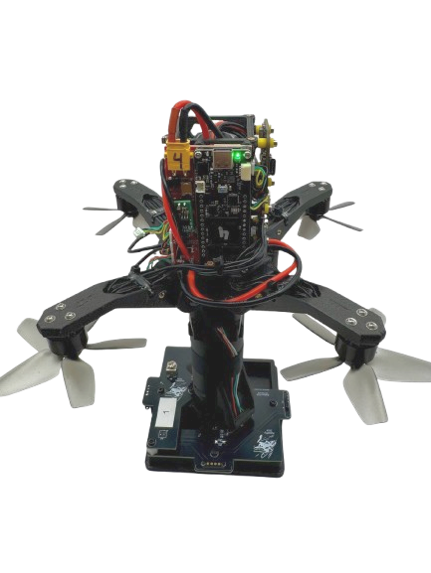
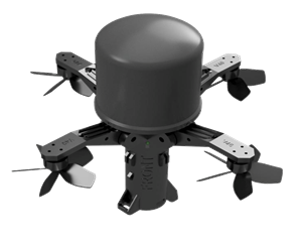
Compressed-air launch of a kinetic, non-explosive interceptor.
Neutralize
-
Autonomous terminal guidance
-
≥95% hit probability
-
No explosives or fragmentation
-
Minimal collateral risk
Persist
-
Hot-swap modular launcher
-
Scalable up to 98 interceptors
-
Continuous protection against persistent ISR
Why This Matters to the Modern Warfighter
Silent tethered drones enable:
- Constant enemy visibility
- Precision fires
- Loss of maneuver advantage
- Increased casualty risk
SkyShield Sentry restores tactical concealment and freedom of movement by:
-
Detecting drones that emit no RF or GPS signals
-
Removing persistent ISR from the battlespace
-
Providing early warning before targeting begins
- Operating autonomously under fire
This is first-line detection against silent threats and last-line protection when other defenses fail
Primary Military Use Cases:
-
Forward operating bases under persistent ISR
-
Trench lines and static defensive positions
-
Mobile units threatened by overhead surveillance
-
Critical infrastructure monitored by tethered drones
-
Expeditionary and austere deployments
Software-defined, mobile counter-UAS
system for rapid detection and kinetic
neutralization of hostile drones.
Technical Specifications
|
Target Type
|
FPV and camera drones, ≤ 1 kg
|
|
Range
|
Up to 1,000 m
|
|
Single-Interceptor HitProbability *
|
≥ 95%
|
|
Weight (interceptor +launch tube) *
|
700 g
|
|
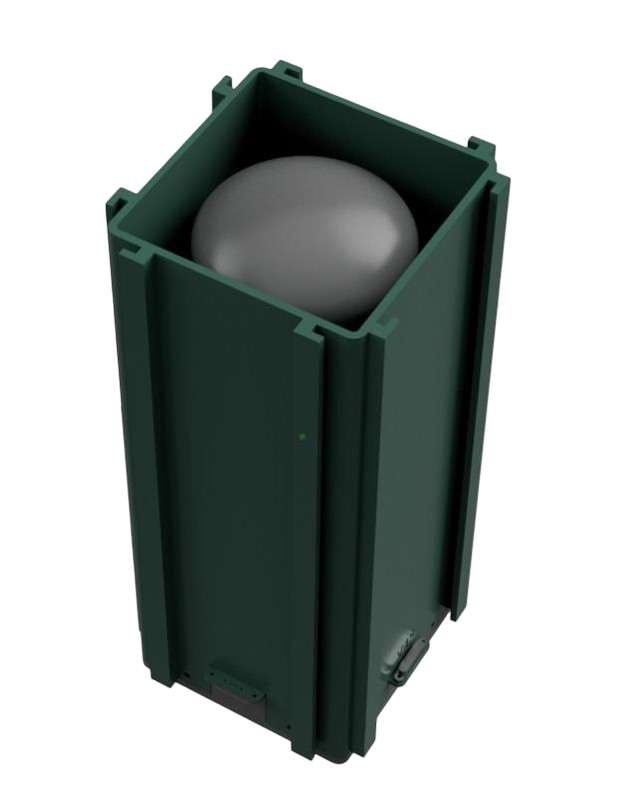
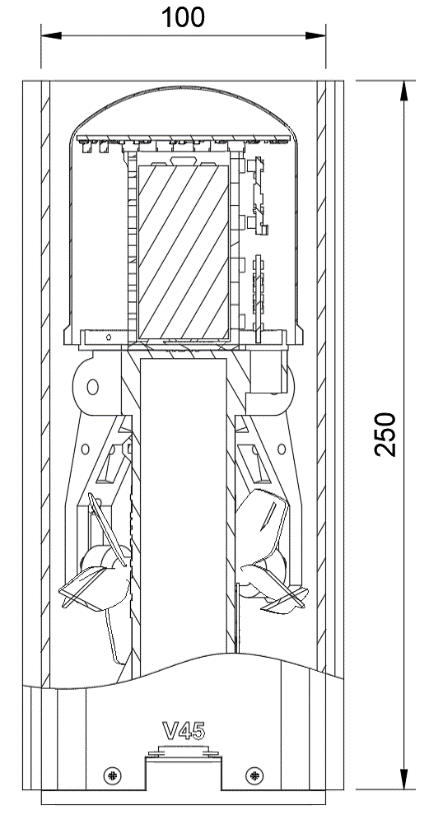
Dimensions (launch tube)
|
100 × 100 × 250 mm (4 × 4 × 10 in)
|
|
Maximum number of interceptors in one system
|
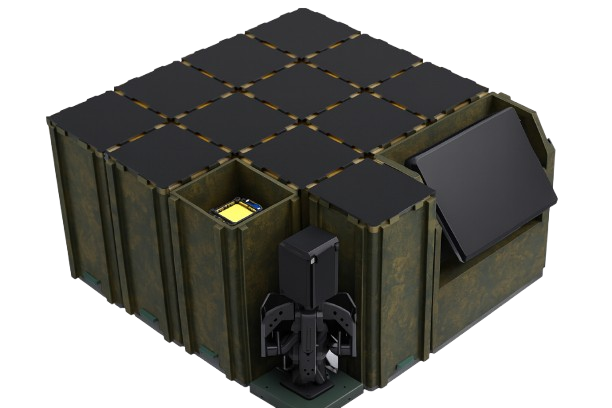
98 (10 × 10 grid)
|
|
Maximum flight time
|
5 min
|
|
Maximum speed
|
135 km/h (85 mph)
|
|
Operational Endurance (98-interceptor system, single charge) *
|
24 hours
|
SkyShield Sentry
Features:
- Fully assembled and factory-sealed interceptors – no setup required
- Cost-efficient, disposable interceptor drones
- Acoustic radar technology for guidance toward incoming drones using sound and AI
- Real-time threat classification and prioritization
- Compressed-air launch system capable of operation from off-level positions or moving vehicles
- Kinetic, non-explosive neutralization
- Network-ready for integration with external C2 systems*
- Fully autonomous operation — no skilled operator required
- Five-year service life enabled by intelligent battery management and wear leveling*
- Shore power support: 24 V DC or 110/220 V AC (via power adapter)*
Primary Use Cases:
-
Base and forward operating position defense
-
Critical infrastructure protection
-
Mobile convoy and vehicle escort
-
Temporary event and perimeter security
Detection & Tracking:
-
Sensor fusion across multiple modalities
-
Direction finding and range estimation
-
High clutter rejection and low false positives
-
Operates in GPS-denied and RF-congested environments
Interceptor:
-
Kinetic interceptor drone
-
No explosives or fragmentation
-
Designed to minimize collateral risk
-
Autonomous terminal guidance
Command & Control:
-
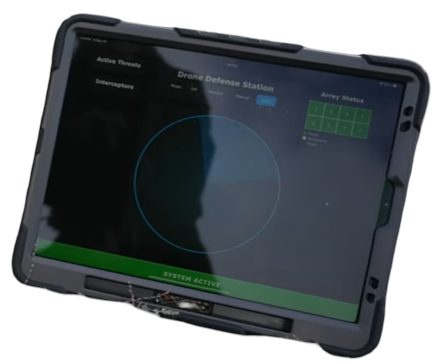
Local operator interface
-
Autonomous engagement modes
-
Manual override supported
-
API for external sensor and C2 integration *
Launcher System:
-
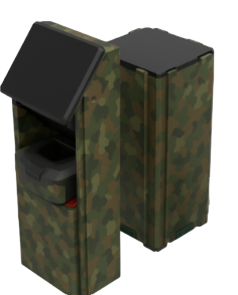
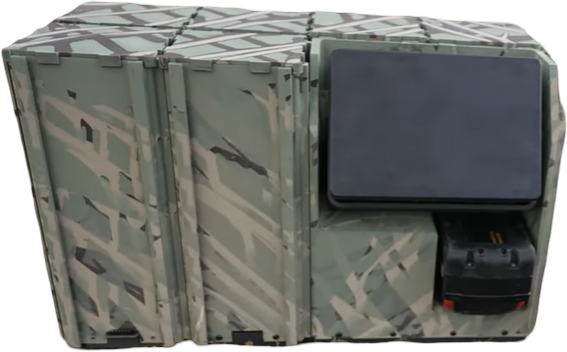
Modular multi-tube launcher
-
Vehicle-mounted or static configuration
-
Hot-swap capable
-
Scalable from single to multiple launch modules